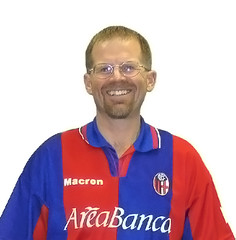
I finally replaced my old Compaq iPAQ with a Smartphone. Because my wife works for Motorola I was limited to their products. Fortunately, the new Q9m is a big improvement over the original Q.
The battery lasts longer, the keyboard is easier to use.
I added Verizon's data plan to our Family Talk plan for a surprisingly reasonable price.
I replaced my PDA and phone with one device that is not much bigger than my phone that also has Internet access.
This is the first message that I've tried to post from the Q. I suspect that the formatting will not look the same. We'll see how it goes.
Pastor Rod
Showing posts with label personal. Show all posts
Showing posts with label personal. Show all posts
Tuesday, May 27, 2008


Monday, February 11, 2008
14 Ways to Increase Your Empathy
Empathy may be the most important skill we possess as humans. Much depends on our ability to connect with others, to identify what they are thinking and feeling.
Some people are better than others at this. Women tend to outshine men in this area.
But whatever your current expertise, here are 14 things you can do to improve your empathy.
- Listen more, talk less. The most reliable way to know what other people are thinking and feeling is to listen to them when they are talking. When you are talking, they are not. Just by talking less, you can dramatically improve your empathy.
The bottom line is that if you care about people you will find a way to demonstrate it.
Tell me what you think. What have you found to be effective in developing empathy?
Pastor Rod
"Helping You Become the Person God Created You to Be"
Saturday, January 12, 2008
e-Greed
I have been frustrated for some time by the short-sighted mindset of book publishers.
This mindset seems to be a combination of "this-is-how-we've-always-done-it" thinking and greed. Of course, this phenomenon is not limited to Christian publishers. But it does seem to be especially egregious when done "in the name of Christ."
I do not object to individuals or companies making a profit. I believe that it is an honorable thing to provide something of value to the world and to be financially rewarded for those efforts. But I do have a problem with exploitation and "price gouging."
What makes the current situation in e-publishing particularly frustrating is that the publishers are working against their own long-term interests.
We've seen Hollywood's resistance to new technology create confusion and stagnation in the entertainment industry. The music industry has also contributed to the chaos of digital rights management.
I also believe that our current copyright laws need to be redone to reflect the present state of technology.
But even without any change to the copyright statute, book publishers are missing out on an amazing opportunity to take advantage of today's digital "revolution."
With the invention of the printing press, books quickly went from a luxury item affordable only to a few wealthy individuals or institutions to an inexpensive medium for the transmission of and "democratization" of vast new fields of knowledge.
The Reformation could never have happened without the new world of publishing made possible by the printing press. It is hard to imagine the Industrial Revolution ever gathering any "steam" as long as books needed to be copied by hand. The Scientific Revolution was an effect of the print technology "cause."
Before the printing press, a handwritten Bible might take a single monk 20 years to transcribe. In 1424, Cambridge University library owned only 122 books, and each of them cost the equivalent of a small farm. According to the Encyclopaedia Britannica, by 1500 there were more than 9 million books in Europe.
Imagine what would have happened if William Caxton had marketed his edition of The Canterbury Tales with this approach:
You can purchase your own copy of the ribald tales in Chaucer's masterpiece. The hand-copied edition would set you back a lifetime of earnings. But now you can buy this work produced by the new printing press at a substantial discount. For a mere five-years' salary you can order your personal edition. Once enough individuals sign up for this pre-publication offer, we will begin setting the type.
That's enough historical reflection. Now for my rant.
Disclaimer: What follows in my experience and my opinion. I do not claim that this company is alone guilty of the practices and attitudes I mention. Nor do I claim that it is the worst offender.
Some time ago, I purchased the Scholar's Library: Gold from Logos Bible Software. Its current price is $1379.95.
As I recall, that's the same price that I paid. It was a lot of money. But I thought it was a good investment.
The concept is appealing.
- Electronic books require no shelf space (something that I have less and less of).
- I can search all my books by topic or Bible reference.
- I can do research much more efficiently than with printed books.
Since my initial purchase, I have bought one additional book: The Hermeneutical Spiral by Grant Osborne. I had thought about buying the print edition, and the electronic edition was slightly cheaper. But I've gotten little use out of the book in the six month's I've owned it.
Well, I don't really own the book. I have a copy of it on my hard drive, but I can only access it from the Logos software and only on this one computer.
In December, I received an e-mail of an offer that was "too good to be true." For a mere $395.95 I could "own" $6,000 worth of books (300 individual titles). Of course, the value is calculated by what I would have to pay to get print editions of these works. Also, as an owner of the Scholar's Library Gold package, I already have several of them (about one-third). Oh, and I have to buy before December 31, 2007. Any CDs not sold by then will be destroyed and never offered again. And in case I have a slight shortage of cash, I can go on the installment plan starting at $55 dollars a month.
They include a little disclaimer that sounds like it was written by the Payday Advance Loan people:
The payment plan is a budgeting tool which can be used wisely or irresponsibly—"choose wisely". Don't use a payment plan or buy products you can not afford. While we would love everyone to buy all our books, we do not want people to go into debt because of us or abuse a payment plan.
Did I mention that several of the books most people would never buy unless they were included in a "package deal"? And a few of them appeared to be the public domain.
I don't have to buy it. By not buying it I am not harmed in any way. The value of my previous purchase does not diminish if I pass on this "upgrade."
So what's my problem with this offer?
For starters, it sounds like I'm being sold a used car.
Things like "offer good only" until December 31, leftover product will be destroyed, never be offered again, installment plan.
Second, the price of the print editions is irrelevant.
Only a fraction of the retail price of a printed work goes to the author. The remainder goes for production and distribution costs. Eventually, the production and distribution costs of an electronic product are zero. Yes, the books have to be created in the electronic format, but this only has to be done once. Even new editions can be produced with virtually no work. And customers can download electronic books at an insignificant cost to the publisher.
Third, these "special offer" prices should be the regular prices.
If they can afford to sell these books at the "one time offer" price, they could sell them forever at the same price. Every additional copy is pure profit, once the royalties are paid.
This whole electronic publishing thing could be revolutionary.
What if I could convert my own documents into the same format and add them to my purchased collection?
Surprise, I can do just that with the Personal Book Builder.
For a mere $89.95 I can buy software to convert my own documents. But wait, the license is good only for one year. And no one else can use the documents I create. I can't even use them unless I access them on the very same computer on which they were created.
Of course there is the Personal Book Builder—Standard Edition. It will set me back $249.95. And it's also only good for one year. What's more, I cannot "sell" my documents to anyone else. I can only distribute them for free. If I want to sell them, I must buy a different (more expensive) license and pay additional processing fees.
Even with this software, converting my own documents is a complex process involving several steps.
And then, only Logos customers who own one of the "seven boxed products" will be able to read my work.
Have these guys heard of Adobe Acrobat?
Their business model seems to be based on protecting their ability to charge premium prices for their software and electronic "books." The irony is that they would be able to make significantly more money if they weren't so greedy. Of course, they are not the only ones who are greedy here. The print publishers are trying to hang on to their stranglehold of the market. They find themselves the owners of electronic rights that they
- Claimed for books they had published before there was such a thing.
- Tricked unsuspecting authors into giving away.
And they are selling these works at a price point that is designed to protect the printed product, a price point that gives them (but not the author) an obscene percentage of profit.
The truth is that traditional publishers are becoming increasingly irrelevant. Instead of positioning themselves to add real value in a new world, they are trying to slow down technological progress.
Someday, someone will provide a low-cost, high-value channel for publishing and purchasing electronic works. Whoever does will become ridiculously wealthy. And I'll be able to say, "I told you so."
Pastor Rod
"Helping You Become the Person God Created You to Be"
Saturday, September 01, 2007
All Around the World
One of the cool things about writing a blog is having readers from other countries. The Internet is indeed creating a global village.
Over the past five months, this blog has been visited by individuals from 94 countries.
The top ten are
- USA
- Canada
- UK
- Australia
- Germany
- Malaysia
- Denmark
- South Africa
- Netherlands
- India
Some of the more interesting and surprising locations for visitors were
- Romania
- United Arab Emirates
- Czech Republic
- Slovenia
- Pakistan
- Lithuania
- Iceland
- Georgia
- Mozambique
- Azerbaijan
- Malawi
- Malta
- New Caledonia
Almost 5% of my visitors are using a language other than English for surfing the Internet.
So if you are one of my international visitors, I'm glad to welcome you to my little corner of the world. I enjoy meeting people from different countries and different cultures. I also teach ESL. If you have any questions about my use of English, ask about it in the comments. I love to answer questions like that. I learn a lot in the process.
God Bless,
Pastor Rod
"Helping You Become the Person God Created You to Be"
Saturday, August 25, 2007
Missional Freedom
The person who risks nothing, does nothing, has nothing, is nothing, becomes nothing. He may avoid suffering and sorrow, but he simply cannot learn and feel and change and grow and love and live. He has forfeited his freedom. Only the person who risks is truly free.
Anonymous
I've been thinking over a few ministry encounters that took place over the past week and how I responded to them differently than I would have before I started cultivating a missional mindset.
Freedom from the pressure to put on a good show: Few people understand the pressure a pastor feels to make sure that the Sunday service is worthwhile for those who attend. While it has been quite some time since I feel the need to be entertaining on Sundays, I only recently realized that the "quality" of the sermon was not the primary factor in the "success" of the Sunday service. I no longer believe that I am responsible for the effectiveness of the Sunday service. I leave that in God's hands.
Freedom from the desperate need to "sell" the church: Another burden pastors commonly feel is the pressure to sell the services of the church to prospective "customers." When someone would call asking questions about our congregation, I would try to sell them. When people would visit on Sundays, I would try to convince them to come back the next Sunday. Now I no longer apologize for our deficiencies. I simply invite people to join us in the journey without putting pressure on them or on me.
Freedom from the fear of wasting my time: Because I am not pouring all my time and energy into the Sunday service, I now am free to "waste" my time when ministry opportunities come up. Being with people trumps just about everything else. I no longer do a cost analysis on my time. I can afford just to hang out with people without constantly telling myself that I have to get back to the office and "get some work done."
Freedom from the fear of wasting my charity: I also have found that I am now able to give to others without calculating whether my gift is a good investment. I can take the chance that my contribution will not produce the results I intended for them to produce. This is not to say that I am frivolous with financial contributions. But I can give away money in situations where there is still a chance that the person is taking advantage of me.
Freedom from the tyranny of busyness: I no longer feel the need to prove my value by staying busy. I have learned how to relax and enjoy life. I don't have to be always hurrying to a meeting or rushing to an appointment.
Freedom from the compulsion to produce results: I no longer believe that it is my job to produce results. My job is to be faithful to my calling and to be open to the ministry opportunities that God puts in my way. The results are his responsibility.
Freedom from the need to change people: Because I believe that the results are God's responsibility, I no longer feel the need to change people. Only God's grace can chance people anyway. I am willing to be a channel of his grace, but I leave the results up to him.
Freedom from the fear of inadequacy: Because the results are God's problem, I no longer feel overwhelmed by the magnitude of the needs I encounter. Of course, I am inadequate to meet those needs. But that is not my responsibility. My responsibility is to "be there" for others, to point them to the One who can meet there needs.
So what is your experience? Have you experienced a similar freedom in your ministry (whether you are a pastor or not)? Have you found other aspects of this freedom that I have overlooked?
Pastor Rod
"Helping You Become the Person God Created You to Be"
Sunday, July 15, 2007
I’m Back
For the past several days I have been on vacation with my family. Unfortunately, there was no Internet access where we were staying.
Now that I'm back, I'll get back to my regular (irregular) schedule.
Pastor Rod
"Helping You Become the Person God Created You to Be"
Saturday, May 19, 2007
They Just Don’t Get It
As I hung up the phone, I had an uneasy feeling that I'd just been taken.
The call had been from a vendor about a past-due bill. I was given the option to pay with a "phone check." I was busy when the call came, and I had done this a few times before, so I wasn't suspicious—until the call ended. The more I thought about it, the more certain I was that this was phone fraud.
So I frantically tried to contact my bank.
I went to their Web page, but I couldn't find a phone number for emergencies. I called the customer service number and got a menu—without any options that fit the situation. I dug a little more online and found a more specific number. I still had to go through a long menu, but this time I was able to talk with a real person.
I explained the situation to the young lady.
She told me that I had three options, none of which would really solve my problem.
I asked if I could put a hold on the account. She said no.
We talked for some time with her repeating the three options several times (always in a condescending tone).
Eventually, she told me that I had zero liability if I was the victim of fraud.
I said, "I'm glad to hear that. It would have been good if you had told me that at the beginning of the conversation."
She said, "Sir, I'm offended that you say that I should have told you that at the beginning. I answered your questions."
I replied, "But it's your role as the expert to answer the questions that I'm not smart enough to ask."
She snapped, "Sir, I answered the questions that you asked. I was doing my job."
She wanted to argue with me about this. Finally, I just said, "Listen, you told me that I have no liability. That's all I need to know. Thank you."
This was a person who was hired to handle problems.
Most of her callers are upset. I was panicked. But, I suspect, many of her callers are angry. "Her job" is to defuse the situation and to make the caller feel good about her bank. Yet she was only concerned about fulfilling the requirements of the call. It's as if she sees the calls as an annoyance, a distraction.
If she really understood "her job," she would welcome emotional, even irate, customers. The more problems there are, the more valuable she could be to the bank. And calls like mine, would make her into an easy hero—if she understood what "her job" really is.
She could make my problem virtually go away, simply by telling me, "Don't worry, Sir. You have zero liability if you are the victim of fraud. You don't really need to do anything. But you do have these three options, if that will make you feel more secure."
But she was following the rules, answering my questions.
Now here's the kicker, when I couldn't get through to the bank right away, I called 911.
Just as I finished my conversation with the "customer service" expert, a police officer shows up.
I start to explain the whole situation to her. I apologize for even calling in the first place.
She suggests that I call the company that the bill was for. (Of course, that is the logical thing to do, but I was more concerned with preventing a big disaster at the time.)
So I called the company and got a person who did get it. She checked my account and was able to tell me eventually that it showed a payment for the amount I had authorized in the first call. Then she wanted to know why I was uncomfortable with the collection call. She asked if there was a problem with the "professionalism" of the caller. She wanted to make sure that there wasn't a problem on their end. And, if there was, she wanted to make certain that it didn't happen again.
I thanked her, hung up, and gave a sheepish grin to the police officer.
By now, I'd lost track of how many times I'd felt like a complete idiot.
And I really had no one to blame but myself.
But there were several things my bank could have done to minimize the damage. Instead, they gave me even more opportunities to feel stupid.
So here's the question: How does the church do the same thing to the "unchurched"?
- Do we have a similar confusion about what our "job" is?
- How do we make people feel stupid?
- Do we find ourselves answering people's questions instead of telling them what they really need to know?
Let me know what you think. I'd be especially interested in any "horror stories" you might have about encounters with churches.
Pastor Rod
"Helping You Become the Person God Created You to Be"
Saturday, May 05, 2007
No Accent
Since I moved to the Chicago area 25 years ago, people have wanted to know what my accent was. As it turns out, I don't have one.
Try the quiz for yourself and post your results here. (Philosophy students: this does not count toward extra credit. I'm generous, but not that generous.)
Pastor Rod
"Helping You Become the Person God Created You to Be"
| What American accent does Rod have? His Result: The Midland "You have a Midland accent" is just another way of saying "you don't have an accent." You probably are from the Midland (Pennsylvania, southern Ohio, southern Indiana, southern Illinois, and Missouri) but then for all we know you could be from Florida or Charleston or one of those big southern cities like Atlanta or Dallas. You have a good voice for TV and radio. | |
| The South | |
| Philadelphia | |
| The Inland North | |
| The Northeast | |
| The West | |
| Boston | |
| North Central | |
| What American accent do you have? Quiz Created on GoToQuiz | |
Try the quiz for yourself and post your results here. (Philosophy students: this does not count toward extra credit. I'm generous, but not that generous.)
Pastor Rod
"Helping You Become the Person God Created You to Be"
Saturday, February 24, 2007
One Year
This blog is celebrating its first anniversary this month. In February of 2006, I made my first post wondering if anyone would read it.
Writing this blog has been very beneficial for me. I've become a better writer. I've meet several new friends. I've learned about many things I was only vaguely aware of just one year ago.
I want to thank all who have taken the time to visit and especially those who have risked sharing their own thoughts in the comments.
I hope that some of you have found this blog helpful in some way.
May God help all of us to continue to grow in his grace and become more and more like his Son.
Pastor Rod
"Helping You Become the Person God Created You to Be."
Writing this blog has been very beneficial for me. I've become a better writer. I've meet several new friends. I've learned about many things I was only vaguely aware of just one year ago.
I want to thank all who have taken the time to visit and especially those who have risked sharing their own thoughts in the comments.
I hope that some of you have found this blog helpful in some way.
May God help all of us to continue to grow in his grace and become more and more like his Son.
Pastor Rod
"Helping You Become the Person God Created You to Be."
Tuesday, January 16, 2007
Sono molto occupato
Sorry I haven't been able to post more frequently. I've been very busy teaching. I'm teaching every morning (Mon-Sat) at the middle schools.
I'm also teaching three nights a week with a group of 30 adults. They range in ability from school teachers and physicians who understand English well to people who know virtually no English. It is difficult to keep the advanced students interested without losing the beginners.
My Italian continues to improve. I can use the correct verb forms. But I still talk slowly.
I'll try to respond to the comments soon. I have to go now.
Ciao,
Rod
I'm also teaching three nights a week with a group of 30 adults. They range in ability from school teachers and physicians who understand English well to people who know virtually no English. It is difficult to keep the advanced students interested without losing the beginners.
My Italian continues to improve. I can use the correct verb forms. But I still talk slowly.
I'll try to respond to the comments soon. I have to go now.
Ciao,
Rod
Wednesday, January 10, 2007
Sono in Italia
On Sunday afternoon, I left for Italy. I will be in Sicily for a few weeks. I am teaching English at a couple of middle schools in Termini Imerese. It is the Sister City for Elk Grove Village. I was here for a few weeks in 2005 doing the same thing.
I intend to continue my series on the Reasons to Abandon Christianity. But I will also include a few personal posts from time to time. I apologize in advance if I don't respond to your comments in a timely manner. It doesn't mean that I'm not interested in what you have to say.
I'm staying with some dear friends who treat me as part of their family. Their daughter is expecting a baby girl in April. I feel like an uncle.
The people here know how to enjoy good food, friendship and life in general. Every time I come here, I am convinced that we need to slow down in America. We spend too much time on things that are not terribly important.
Hospitality is an art form in Italy. Coincidentally, I'm reading a book by Miroslav Volf, Free of Charge: Giving and Forgiving in a Culture Stripped of Grace. I'll have to post some of his excellent comments about generosity and forgiveness.
There are few things that make me feel more truly human than when someone's face lights up in recognition and he or she comes toward me with a huge smile and outstretched arms. Hugging is good for the soul. These people value me just for being here, without me doing anything for them. We should all give this gift to the people in our lives.
I appreciate all of you who pay me the honor of caring about what I write here. I especially appreciate the double honor you grant me when you take the time to offer your own comments.
May God bless you and encourage you to share his love with those you meet today,
Pastor Rod
"Helping You Become the Person God Created You to Be"
I intend to continue my series on the Reasons to Abandon Christianity. But I will also include a few personal posts from time to time. I apologize in advance if I don't respond to your comments in a timely manner. It doesn't mean that I'm not interested in what you have to say.
I'm staying with some dear friends who treat me as part of their family. Their daughter is expecting a baby girl in April. I feel like an uncle.
The people here know how to enjoy good food, friendship and life in general. Every time I come here, I am convinced that we need to slow down in America. We spend too much time on things that are not terribly important.
Hospitality is an art form in Italy. Coincidentally, I'm reading a book by Miroslav Volf, Free of Charge: Giving and Forgiving in a Culture Stripped of Grace. I'll have to post some of his excellent comments about generosity and forgiveness.
There are few things that make me feel more truly human than when someone's face lights up in recognition and he or she comes toward me with a huge smile and outstretched arms. Hugging is good for the soul. These people value me just for being here, without me doing anything for them. We should all give this gift to the people in our lives.
I appreciate all of you who pay me the honor of caring about what I write here. I especially appreciate the double honor you grant me when you take the time to offer your own comments.
May God bless you and encourage you to share his love with those you meet today,
Pastor Rod
"Helping You Become the Person God Created You to Be"
Friday, October 20, 2006
50
This weekend I will celebrate my 50th birthday. As milestones go, this is a pretty big one. Milestones are good opportunities to reflect on the past. They provide an occasion for reminding ourselves of what’s really important.
So I thought I’d take some time to list a few of the things that I’ve learned in my first fifty years.
Relationships are more important than anything else. When I look back over the past half-century, the things that mean the most to me are the relationships that I have. Possessions, accomplishments and experiences pale in comparison with the people that have enriched my life. And the most important relationship, which provides ultimate meaning and significance to my life, is my relationship with my heavenly Father who loves me more than all the others I am connected to.
The things that you can count are not the things that count. Success is hard to quantify. If you can count it or measure it, it’s probably not that important. The number of digits in my salary or my bank account have nothing to do with my success. The number of people who show up to hear me preach on Sundays is not a measure of my success. The number of hits on this blog do not determine my success. All these things are good, but they are not directly tied to my success. I have come to believe that success is more about faithfulness than anything else.
How you finish is more important than how you start. No one really cares who led lap 43 of the Indianapolis 500. A good start is nice. But finishing well is the key. In each of the “seven letters” of Revelation, Jesus commends “the one who overcomes,” the one who is faithful to the end. Woody Allen said that 90% of success is just showing up. But I would say that 100% of success is not giving up.
Strengths are more important than weaknesses. Most people focus on weaknesses rather than strengths. When kids bring home their report cards, parents tend to focus on the bad grades instead of the good grades. Most employee evaluations imply that the greatest opportunity for improvement is by overcoming deficiencies. The church health movement teaches that congregations grow only to the level of weakest of five, six or ten functions of a healthy church.
But I think that we’ve got this all backwards. The Gallup Organization has demonstrated that we produce the greatest results when we focus on using our strengths rather than on improving our weaknesses. And this doesn’t even take into account the damage that is done by the negativity generated by the focus on weaknesses.
Few people really understand leadership. Our society idolizes “strong,” aggressive, ambitious people as great leaders. Getting things done is considered a key component of leadership. Charisma has become currency of clout in our celebrity-crazed culture.
Even pastors are encouraged to take their leadership philosophy more from Nietzsche, Machiavelli and Attila the Hun than from Jesus. Pragmatism trumps theology. If Joel Osteen has such a big church, he must be doing something right.
Empathy is the secret to . . . everything. If you want to be an excellent teacher, you need empathy. If you want to be an excellent salesperson, you need empathy. If you want to be an excellent leader, you need empathy.
It may be possible to fake empathy, for a while. But it’s so much simpler just to really care about people.
Empathy even makes you a better driver.
Truth is elusive. I am strongly opinionated. And I believe that my opinions are correct. But I know that I’m wrong about some things. As N. T. Wright says, “I just don’t know which are wrong.” I try to remember that my commitment is to the truth and not just to my idea of the truth. If my understanding of the truth changes (and it does from time to time), then I must accept this refined awareness of the truth. Christian mystic Meister Eckhart said, “Truth is something so noble that if God should turn aside from it, I could keep to the truth and let God go.”
The little decisions are the important ones. Most of the time, we make the right choices when we know that the decision is important. The problem is that many decisions appear to be insignificant at the time and only prove to be important long after we make our choice. Every choice we make also changes the options that we have available for future choices. The weight of a lot of little choices is greater than the weight of a couple of big choices.
The most important things cannot be earned. I cannot make myself valuable. I cannot make myself loveable. I cannot make myself significant. These things (self-worth, love and significance) can only be accepted as a gift. Ironically, the more I try to earn them, the less likely I am to get them.
There might be few more things that I could add to this list, but these seem to be the most important—right now. Tell me what you would put on your own list.
Pastor Rod
“Helping you become the person God created you to be”
So I thought I’d take some time to list a few of the things that I’ve learned in my first fifty years.
Relationships are more important than anything else. When I look back over the past half-century, the things that mean the most to me are the relationships that I have. Possessions, accomplishments and experiences pale in comparison with the people that have enriched my life. And the most important relationship, which provides ultimate meaning and significance to my life, is my relationship with my heavenly Father who loves me more than all the others I am connected to.
The things that you can count are not the things that count. Success is hard to quantify. If you can count it or measure it, it’s probably not that important. The number of digits in my salary or my bank account have nothing to do with my success. The number of people who show up to hear me preach on Sundays is not a measure of my success. The number of hits on this blog do not determine my success. All these things are good, but they are not directly tied to my success. I have come to believe that success is more about faithfulness than anything else.
How you finish is more important than how you start. No one really cares who led lap 43 of the Indianapolis 500. A good start is nice. But finishing well is the key. In each of the “seven letters” of Revelation, Jesus commends “the one who overcomes,” the one who is faithful to the end. Woody Allen said that 90% of success is just showing up. But I would say that 100% of success is not giving up.
Strengths are more important than weaknesses. Most people focus on weaknesses rather than strengths. When kids bring home their report cards, parents tend to focus on the bad grades instead of the good grades. Most employee evaluations imply that the greatest opportunity for improvement is by overcoming deficiencies. The church health movement teaches that congregations grow only to the level of weakest of five, six or ten functions of a healthy church.
But I think that we’ve got this all backwards. The Gallup Organization has demonstrated that we produce the greatest results when we focus on using our strengths rather than on improving our weaknesses. And this doesn’t even take into account the damage that is done by the negativity generated by the focus on weaknesses.
Few people really understand leadership. Our society idolizes “strong,” aggressive, ambitious people as great leaders. Getting things done is considered a key component of leadership. Charisma has become currency of clout in our celebrity-crazed culture.
Even pastors are encouraged to take their leadership philosophy more from Nietzsche, Machiavelli and Attila the Hun than from Jesus. Pragmatism trumps theology. If Joel Osteen has such a big church, he must be doing something right.
Empathy is the secret to . . . everything. If you want to be an excellent teacher, you need empathy. If you want to be an excellent salesperson, you need empathy. If you want to be an excellent leader, you need empathy.
It may be possible to fake empathy, for a while. But it’s so much simpler just to really care about people.
Empathy even makes you a better driver.
Truth is elusive. I am strongly opinionated. And I believe that my opinions are correct. But I know that I’m wrong about some things. As N. T. Wright says, “I just don’t know which are wrong.” I try to remember that my commitment is to the truth and not just to my idea of the truth. If my understanding of the truth changes (and it does from time to time), then I must accept this refined awareness of the truth. Christian mystic Meister Eckhart said, “Truth is something so noble that if God should turn aside from it, I could keep to the truth and let God go.”
The little decisions are the important ones. Most of the time, we make the right choices when we know that the decision is important. The problem is that many decisions appear to be insignificant at the time and only prove to be important long after we make our choice. Every choice we make also changes the options that we have available for future choices. The weight of a lot of little choices is greater than the weight of a couple of big choices.
The most important things cannot be earned. I cannot make myself valuable. I cannot make myself loveable. I cannot make myself significant. These things (self-worth, love and significance) can only be accepted as a gift. Ironically, the more I try to earn them, the less likely I am to get them.
There might be few more things that I could add to this list, but these seem to be the most important—right now. Tell me what you would put on your own list.
Pastor Rod
“Helping you become the person God created you to be”
Wednesday, May 24, 2006
Confessions of a Failure
In high school I was voted “most likely to succeed.”
I am intelligent, gifted and confident. So when I discerned God’s call into ministry, there was little doubt that I would eventually find myself leading a large church wielding significant influence within my denomination and the kingdom at large.
But things did not work out that way.
I am completing my 27th year of fulltime pastoral ministry. And “success” seems further away than ever. Many positive things have happened over those 27 years. I’ve had the opportunity to be used by God to influence several individuals toward becoming the people God created them to be. I’ve grown personally and “professionally.” But few would label me a “success.”
I’ve lost parishioners because there were not more visible signs of success. I am a pariah in my own denomination because of the lack of “success.” My family has suffered because I have never been able to “escape” from the small, struggling church environment.
And for many years I was angry with God over this. For some time we were not even on speaking terms. I felt betrayed. He had called me to this particular ministry. He had filled my heart with passion and dreams. But it seemed that every time that “success” was just within reach it would be snatched away.
I’ve put this in the past tense as if it is no longer an issue. This is not quite true. It still hurts when I see inexperienced, less-gifted individuals tapped for leadership roles within the denomination while my name is not even mentioned. It still hurts when I hear once again, “It’s not about you, Pastor. We just need to find a church that has more to offer our kids.” It still hurts when I have to fill out the annual reports that reflect little or no quantifiable “success.”
I’ve questioned my calling. I’ve questioned my abilities. I’ve questioned my faith.
But I have no doubt that this is what God is calling me to do and be and that this is where he is calling me to do it and be it. Unfortunately, he forgot to tell very many others.
What keeps me going is knowing that Jesus was considered a failure by his contemporaries. Paul reminds me that in my weakness God is able to accomplish more than he could in my strength. I do have a commitment to brokenness and surrender that I would have only paid lip service to had I been a great success “out of the gate.”
Yet I still find myself giving God advice, telling him how much more I could do for him and the kingdom if he would only allow me a little “success.” I guess I still have more to learn about brokenness and surrender.
Pastor Rod
“Struggling to allow God to make me into the person God created me to be”
I am intelligent, gifted and confident. So when I discerned God’s call into ministry, there was little doubt that I would eventually find myself leading a large church wielding significant influence within my denomination and the kingdom at large.
But things did not work out that way.
I am completing my 27th year of fulltime pastoral ministry. And “success” seems further away than ever. Many positive things have happened over those 27 years. I’ve had the opportunity to be used by God to influence several individuals toward becoming the people God created them to be. I’ve grown personally and “professionally.” But few would label me a “success.”
I’ve lost parishioners because there were not more visible signs of success. I am a pariah in my own denomination because of the lack of “success.” My family has suffered because I have never been able to “escape” from the small, struggling church environment.
And for many years I was angry with God over this. For some time we were not even on speaking terms. I felt betrayed. He had called me to this particular ministry. He had filled my heart with passion and dreams. But it seemed that every time that “success” was just within reach it would be snatched away.
I’ve put this in the past tense as if it is no longer an issue. This is not quite true. It still hurts when I see inexperienced, less-gifted individuals tapped for leadership roles within the denomination while my name is not even mentioned. It still hurts when I hear once again, “It’s not about you, Pastor. We just need to find a church that has more to offer our kids.” It still hurts when I have to fill out the annual reports that reflect little or no quantifiable “success.”
I’ve questioned my calling. I’ve questioned my abilities. I’ve questioned my faith.
But I have no doubt that this is what God is calling me to do and be and that this is where he is calling me to do it and be it. Unfortunately, he forgot to tell very many others.
What keeps me going is knowing that Jesus was considered a failure by his contemporaries. Paul reminds me that in my weakness God is able to accomplish more than he could in my strength. I do have a commitment to brokenness and surrender that I would have only paid lip service to had I been a great success “out of the gate.”
Yet I still find myself giving God advice, telling him how much more I could do for him and the kingdom if he would only allow me a little “success.” I guess I still have more to learn about brokenness and surrender.
Pastor Rod
“Struggling to allow God to make me into the person God created me to be”
Saturday, May 20, 2006
Back Home

I’m back from my short trip to Italy. I am eager to get back to my regular schedule of posting. Here’s a group of middle school students I met at a restaurant. I had taught them English when I was there last fall.
I met many old friends. This experience reminded me all the more of the importance of relationships and community. Friendship is highly valued in Italian culture.
Pastor Rod
“Helping you become the person God created you to be”
Subscribe to:
Posts (Atom)